ADX Fukushima Head Office

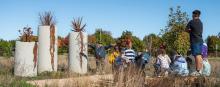
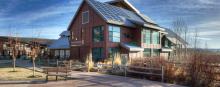
The SITES Gold certified head office of ADX, a sustainable architecture company, is located in Fukushima Prefecture in Japan. This project site is surrounded by a rich natural environment including agricultural fields overlooking the Adatara Mountains. Given the abundance of nature and original landscape, the biodiversity observed on the site is very rich for all vegetation, insects and other living organisms. The deep-rooted company philosophy, “With the Forest,” was thus nurtured.

O Parque

O Parque is an urban requalification mixed-use development located in São Paulo and promoted by the developer Gamaro. Winner of the 29th Master Real Estate Award, it is the first project in Brazil to obtain SITES certification, with technical support from CTE, a leading company in Brazil for sustainability certifications. Built on a previously urbanized plot with full infrastructure, the project integrates residential, commercial, and corporate buildings (the corporate section has LEED BD+C certification), as well as a large central public plaza for recreational use.

Shimizu Corporation Institute of Technology

The Saisei-no-Mori Urban Biotope at the Shimizu Corporation Institute of Technology has been a pioneering urban ecological restoration project since 2006. Designed as a field for biodiversity conservation, this 2,000-square-meter green space was established on a former reclaimed land site in the Tokyo Bay area. By integrating both terrestrial and aquatic ecosystems with a focus on native species, the project has successfully created a habitat that supports diverse flora and fauna.

Springdale Green

Springdale Green is a landmark regenerative project that transformed a 30-acre former industrial site in East Austin into a thriving ecological workplace campus. Once dominated by invasive species and plagued by chronic flooding, the site now supports a biodiverse, resilient native prairie and riparian woodland, while seamlessly integrating human-centered design and wellness amenities. 

Treetop Trail at the Minnesota Zoo

The Minnesota Zoo opened in 1978 as one of the first zoos to organize exhibits by habitat rather than species. Originally named the “Minnesota Zoological Garden,” this progressive zoo was designed to view animals in naturalistic, outdoor, garden-like settings analogous to their ecological and geographic environments of origin. This design included a 1.25-mile-long monorail ride that looped throughout the expansive 485-acre grounds, elevated up to 32-feet above grade to view the surrounding exhibits.

May Lee State Office Complex

The May Lee State Office Complex, a new home for 5,000+ state employees in Sacramento, is the largest zero-carbon, all-electric workplace campus in the U.S. This project provides a case study for how a campus of this scale and complexity can be decarbonized by a holistic approach to minimizing its carbon footprint.