Cultivating biodiversity through SITES

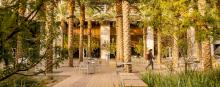
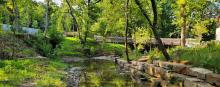
Feature image: The SITES Silver Cultural Arts Corridor Lower Ramble in Fayetteville, Arkansas. Photo courtesy of the City of Fayetteville.

More than 315 registered and certified SITES projects—spanning 20 countries, 31 U.S. states and the District of Columbia—are focusing on enhancing biodiversity. Covering 1.26 billion square feet, these projects range from university campuses, hotels and resorts, government facilities, and public parks to commercial headquarters and mixed-use developments.

The Vineyards at Porter Ranch

At face value, the Vineyards at Porter Ranch is a retail and dining center meant to serve the local Porter Ranch community. Prior to its construction, many residents sought retail and entertainment opportunities outside the community, making Porter Ranch, largely, a bedroom community. However, there was a great interest in keeping business dollars local, and with an ever-increasing awareness of traffic's environmental impacts, the community sought opportunities to keep retail and entertainment local.

Peek into a SITES project: Midtown Park

Images courtesy of Design Workshop.

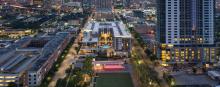
Midtown, historically known as Houston's second neighborhood, flourished in the 1930s and 1940s, but experienced urban decline as suburban alternatives grew in the following decades. As part of a larger renaissance in the city of Houston to reclaim and enliven vacant and public spaces, a public-private partnership was formed to create a premier park destination in the Midtown district.

Midtown Park

Midtown, historically known as Houston's second neighborhood, flourished in the 1930s and 40s, but experienced urban decline as suburban alternatives grew in the following decades. As part of a larger renaissance in the City of Houston to reclaim and enliven vacant and public spaces, a public-private partnership was formed to create a premier park destination in the Midtown district. 

Colby College Athletic Center

The Harold Alfond Athletics and Recreation Center is a new construction project at Colby College in Waterville, Maine. The college is one of only four higher education campuses to achieve carbon neutrality in the United States as of 2022, and plans to use the Sustainable SITES Initiative as its campus landscape standard for all major projects moving forward.